

Article written by Óscar Huertas Rosales
What you have just seen is the first of 12 short chapters that make up this comic, and in each one something will happen that will test Kai, his friends… and Artificial Intelligence (AI) itself.
Sometimes these will be fun adventures, other times they will be moments of tension, reflection or even danger. But there will always be questions that will help us better understand the world to come.
Are you ready?
Maybe not, but neither was Kai! The important thing is not to know everything. The important thing is to have questions, seek answers and dare to live the adventure of knowledge.
Article written by Óscar Huertas Rosales
In a summer that promises to change everything, the protagonist of this story, Kai, is preparing to take a big leap: leaving secondary school behind and starting university, if all goes well. This adventure begins in the summer.
That strange and special summer when secondary school is over, but university hasn't started yet. The summer when you're supposed to rest… although in reality, it's when you think about things the most.
That's how Kai, our protagonist, feels. About to take a big leap in his life, with a backpack full of doubts, excitement and also a little fear. What he doesn't realise is that this summer will be much more than a break between stages. It will be the beginning of an unexpected adventure. And he knows he has to take a big leap… but in which direction?
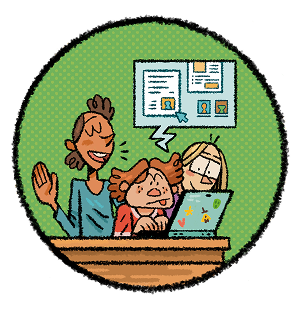
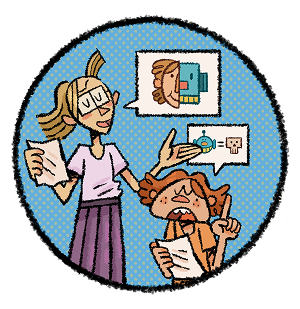
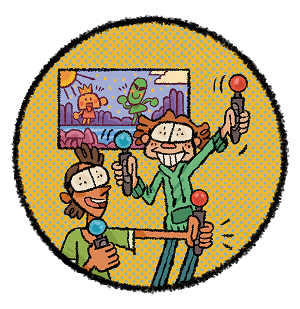
Luckily, Kai is not alone. He is accompanied by Jose, with whom he shares a love of role-playing games, although not so much for new technologies; Alex, an active person, a technology fan and always optimistic; and Sofia, calm, thoughtful and with great intuition that comes from reading many books. Oh yes, and he is also accompanied by someone very special: WAT!
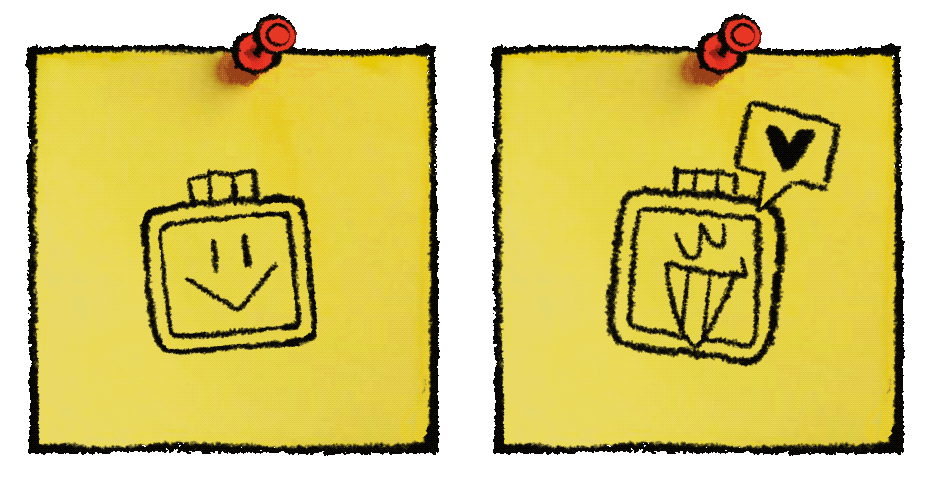
WAT is not just any friend. He is not human. But he is not a typical ‘machine’ either. WAT stands for Wellness Analytic Technology and is his personal assistant and health carer, although he is much more than that. He is a constant, intelligent, connected presence. And he is also the gateway to a world that Kai is just beginning to understand: the world of Artificial Intelligence.
Why use a comic book to talk about AI?
We could have written a textbook, a technical guide or a series of scientific articles. But we chose a comic book. Why?
Because comics are a powerful way to tell stories. They combine words and images, emotion and thought, narration and knowledge. It allows us to see and feel at the same time. And, above all, it makes complex topics such as Artificial Intelligence seem familiar, human and real.
AI is not just for scientists or programmers. It is already part of our daily lives: in our mobile phones, in the algorithms that recommend music or videos, in medicine, in education, in security… even in the decisions that are made for us without us realising it.
But alongside its incredible possibilities, AI also poses challenges, dilemmas and risks. Who decides what AI can and cannot do? How do we avoid bias? Can a machine make ethical decisions? What if it makes a mistake? Who is responsible for AI decisions?
Each chapter also includes:
- An explanatory text to explore the key concepts of AI in greater depth.
- Educational activities and challenges for home or the classroom.
- Recommended reading and interactive links for those who want to know more… AND SOME FREE GIFTS.
This project was created at the University of Granada, at the DaSCI Institute, as part of the IAFER Cátedra ENIA initiative, with the aim of bringing science, technology and critical thinking closer to young people.
Teaching suggestions for classroom use
These are two introductory chapters that serve to introduce the protagonist and the aesthetics of the comic. The activity focuses on finding out what prior ideas the students have about AI.
Activity 1 - What do we know about AI?
Is artificial intelligence used in your family? Have you talked to your parents about it?
- Summary - Round of questions about AI for students.
- Duration - 45 min.
- Type - Debate.
- What is expected from the activity - To establish the students' initial knowledge about AI.
- Resources needed - Blackboard.
- Theoretical justification - To find out the students' initial ideas about AI and detect possible prejudices or misinformation.
- Description of the activity - The teacher asks the students a series of questions to find out their prior knowledge and information about AI. The ideas that are discussed are written on the blackboard for reference. The series of questions that
- Does anyone know what artificial intelligence is?
- Has anyone used an artificial intelligence tool? What for? Was it useful? Did it help you?
- Do you think artificial intelligence is useful?
- What negative consequences could artificial intelligence have?
- Do you think artificial intelligence helps or harms us?
Recommended reading and other resources
- La representación de la ciencia en el cómic – De los inicios a la ebullición superheroica. Revista digital Mètode – Artículo de Álvaro M. Pons y Noelia Ibarra. Universitat de Valéncia
- Cómics y ciencia: la divulgación científica con héroes y villanos de papel – Artículo de Santiago Campillo en Xataka.
- El cómic como herramienta de comunicación científica – Artículo de Olga Carmona Peral en Patreon
- Cómic para divulgar ciencia – Web de Ciencia Canaria
- Los cómic impactan mucho en la divulgación científica – Conferencia de Miriam Ruiz en el evento Ciencia en el Sur
- Science comics collection – Macmillan publishers
- A webcomic of romance, sarcasm, math and language – Archive what if?
- BfR science comics – German Federal Institute for risk assessment
- Science comics – Harvard Lab for AI and Neurotheory
- Advice for making science comics! – Lifeology by Paige Jarreau
- Science comics´ Super Powers – American Scientist by Matteo Farinella
- Alter egos: an exploration of the perspectives and identities of science comic creators – Jordan Collver and Emma Weitkamp. Journal of Science Communication
- Arts & Culture: Science in Comic Books – Physics journal
- Neurocomic – By Matteo Farinella and Hana Ros
- Autores, artistas, proyectos y cómics científicos:
- Megopescao – Pablo García (creador de este cómic)
- Comiciencia – Indira Álvarez
- Molasaber – Carlos Pazos
- Biomiics – Miriam Ruíz
- Laboratoons – Jesús Sánchez
- Colección científic@s – Jordi Bayarri
- Raquelberryfinn – Raquel Gu
- Ciencia en Cómic – Germán Tortosa
- Matteo Farinella
- Desgranando Cómics – Concurso de divulgación a través del cómic del evento Desgranando Ciencia
- Mètode cómic. Ciència en vinyetes – Proyecto de Miguel Ángel Miranda, Luis Resines y Enriqueta Llorca
- Plagas: la batalla microscópica – Falynn Koch
- Colección de divulgación y ciencia – Editorial Norma
- Científicas: pasado, presente y futuro. El cómic – Universidad de Sevilla. Ilustrado por Raquel Gu, Raquelberryfinn
- Divulgación científica a través del lenguaje del cómic. La COVID-19 – Artículo de María Blanca Mayor Serrano