



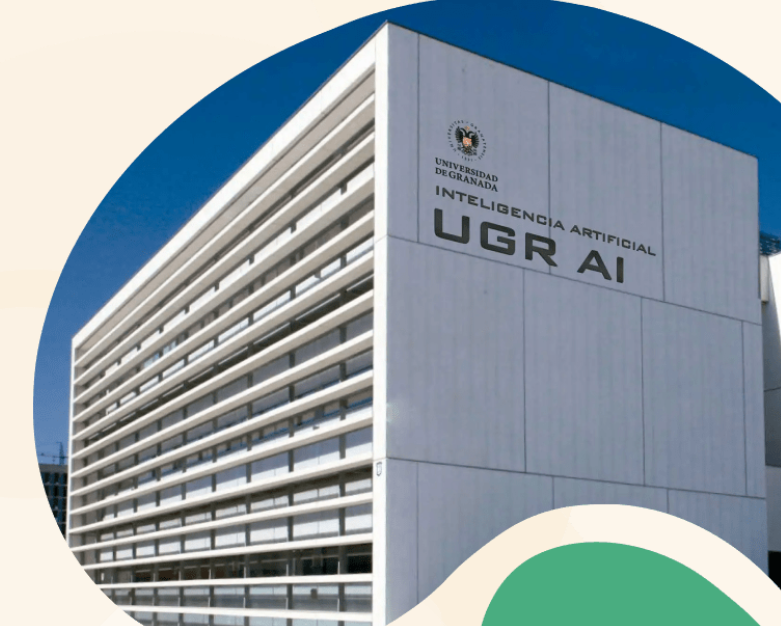
February 4–10, 2026 | Sala Pioneras, UGR-AI Building, University of Granada
General-Purpose AI Systems (GPAIS) are reshaping the foundations of our society. Their versatility across domains brings unprecedented opportunities—but also complex ethical, social, and technical challenges. In high-risk scenarios such as healthcare, justice, and security, the development of ethical and responsible GPAIS is more critical than ever. That’s why training professionals to design, evaluate, and deploy these technologies with integrity is a strategic priority.
This initiative is part of the project “Ethical, Responsible, and General-Purpose Artificial Intelligence: Applications in Risk Scenarios (IAFER)” — funded through the ENIA University-Enterprise Chairs under the European Recovery, Transformation and Resilience Plan (Next Generation EU). The activity is also aligned with the IEEE CIS TaskForce on GPAIS. This Winter School aims to foster advanced knowledge, critical debate, and hands-on training in GPAIS, bringing together leading researchers from around the world to offer a unique educational experience for PhD-level students.
📅 Dates: February 4–10, 2026
📍 Location: Sala Pioneras, UGR-AI Building, University of Granada
📫 Address: Av. del Conocimiento, 37, 18016 Granada, Spain
Program
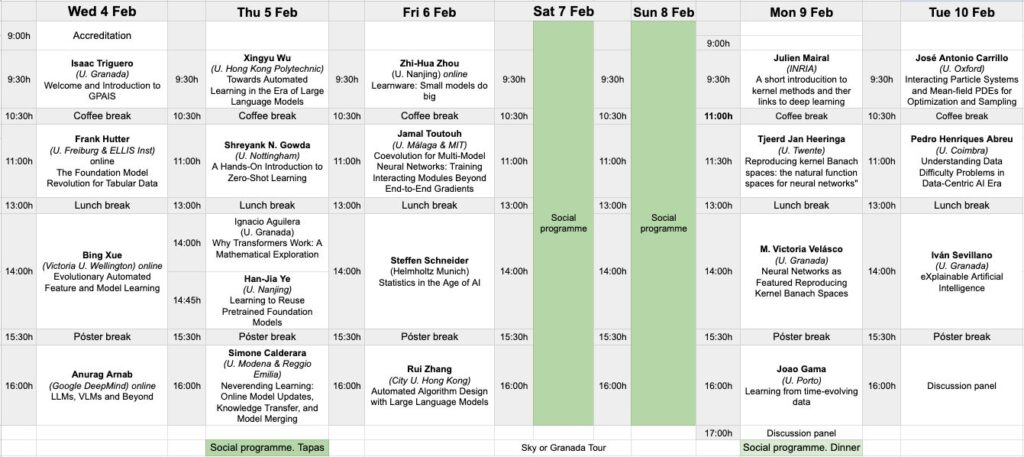
The program will feature lectures, practical workshops, discussion panels, and networking opportunities with national and international experts in ethical AI and GPAIS, and will be structured in two parts: (Part I) three days focused on General-Purpose AI Systems (GPAIS)—covering topics such as foundation models, self-supervised learning, contrastive learning, and zero-shot learning—followed by two days (part II) dedicated to the mathematical foundations of AI, including neural networks and kernel theory. Will be available soon
Join us and help shape the future of responsible AI!
Seats are limited. Don’t miss the chance to be part of a unique educational experience that blends academic excellence, technological innovation, and ethical commitment.
👉 [Registration to attend online is open]
Registration Process
Registration to attend online for free is open
Pre-registration: October 20 to December 12, 2025 (CLOSED)
All interested participants must submit a pre-registration form during this period. In the form, you will be asked to indicate:
- Whether you require accommodation (see Accommodation section below).
- If you wish to participate in the social weekend activity.
- Whether you plan to attend:
- The entire Winter School,
- Only the first part (3 days),
- Only the second part (2 days),
After evaluating all applications, selected participants will be notified in early November and invited to complete the final registration. Registration for online participation will open after this stage.
Fees
- Full in-person attendance (5 days): €500 (VAT included) * (CLOSED)
Includes:- Morning and afternoon coffee breaks
- Lunch during school days
- Gala dinner (first week)
- Guided city tour
- Part I – GPAIS (3 days): €400 (VAT included) * (CLOSED)
Includes:- Morning and afternoon coffee breaks
- Lunch during school days
- Gala dinner
- Guided city tour
- Part II – Maths of AI (2 days): €300 (VAT included) * (CLOSED)
Includes:- Morning and afternoon coffee breaks
- Lunch during school days
- Attend online – Free
- You will receive the connection link in your email the day before the start of winter school.
- «The lectures are free of charge. The registration fees will be used exclusively to cover meals and social program costs.»
Social Weekend Activity
An optional social activity (skiing in Sierra Nevada) will be organized over the weekend. This activity is not included in the registration fee and must be paid separately by those who wish to participate. (approx 200€ VAT included)
Accomodation Details
For the duration of the winter school, students have the option to book a room in a modern student residence, conveniently located just a few minutes’ walk from the UGR-AI campus and 15 minutes from the city center by public transportation. The residence offers high-end facilities, including a gym, pool, rooftop terrace, and lounge. Each student will have a private studio with their own bathroom and a small kitchen. The cost is €67 per day, including breakfast. More details can be found here.
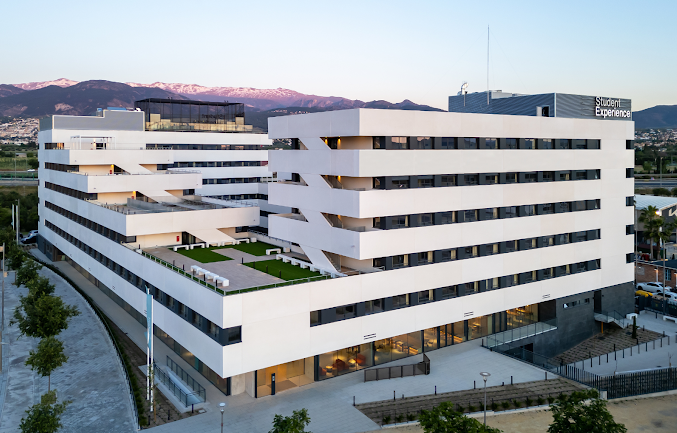

Alternatively, students are free to arrange their own accommodation, such as hotels or Airbnb, if they prefer.
LOCATION
The winter school will take place in the charming city of Granada, known for its rich history, stunning architecture, and vibrant culture. The school will be held on the campus of the Andalusian Research Institute in Data Science and Computational Intelligence (DaSCI), part of the University of Granada, located in the south of the city, approximately 15 minutes from the city center by public transportation.
The modern campus offers excellent facilities for lectures and group work, with breakout rooms designed for collaboration. Coffee breaks and lunches will be held in the spacious lobby, and there are also several local restaurants nearby. The campus is easily accessible by public transportation or car.
Beyond the academic program, participants will have the opportunity to explore Granada’s historic landmarks, including the Alhambra Palace and Generalife Gardens, which provide a unique and inspiring backdrop for the summer school.
Meet Our Speakers
We are proud to welcome a distinguished group of international experts whose work is shaping the future of ethical and responsible AI. These thought leaders bring cutting-edge insights from academia and industry, covering topics such as AutoML, sustainable AI, continual learning, and AI in high-risk domains.

Isaac Triguero (Granada University)
Senior Research Fellow at the University of Granada and Associate Professor at the University of Nottingham. He holds a Ph.D. in Computer Science from the University of Granada and specializes in machine learning, big data analytics, and optimization. Dr. Triguero has published extensively in top journals and conferences and serves as editor for leading AI publications.
Frank Hutter (University of Freiburg & ELLIS Institute Tübingen)
A pioneer in Automated Machine Learning (AutoML), Frank Hutter is one of the most cited researchers in the field. His work on hyperparameter optimization, neural architecture search, and tabular foundation models has set global benchmarks. He is also the co-founder of the AutoML conference and recipient of multiple ERC grants.

Steffen Schneider (Helmholtz Munich)
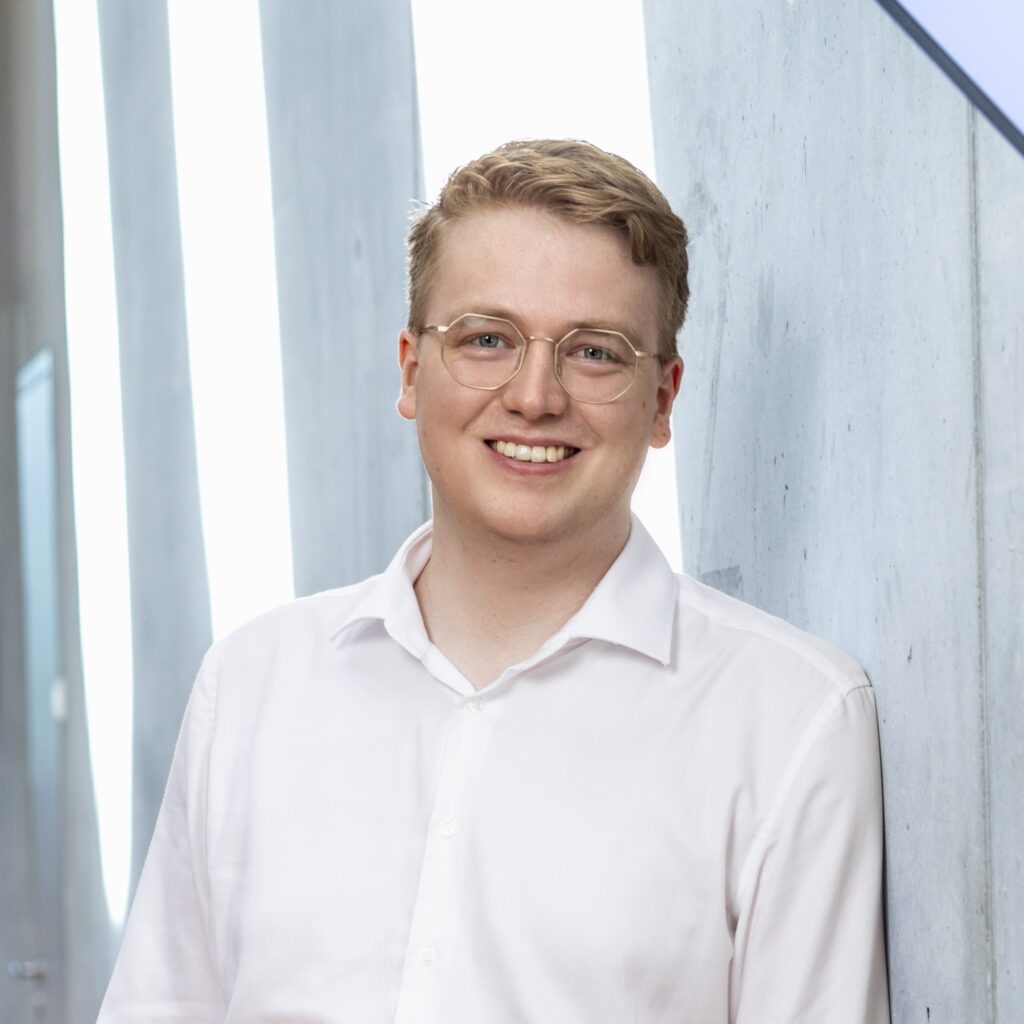
Tenure-track group leader at Helmholtz Munich and affiliated faculty at LMU Munich and the Munich Center for Machine Learning. His research focuses on statistical modeling of biological dynamical systems. He earned his PhD through the ELLIS program at EPFL and the Tübingen AI Center, and was an AI Resident at Meta. He founded the non-profit KI macht Schule to promote AI education. Supported by a Google PhD Fellowship, he was named Early Career Scientist of the Year 2024 for his contributions to research and education.
Joao Gama (Porto University)
Full Professor at the School of Economics, University of Porto, and Vice Director of LIAAD, the Laboratory of Artificial Intelligence and Decision Support at INESC TEC. He earned his Ph.D. in Computer Science from the University of Porto in 2000. His research focuses on machine learning, particularly data stream mining, real-time learning, and adaptive systems. He is a Fellow of the IEEE and the European Association for Artificial Intelligence (EurAI), and has authored over 250 peer-reviewed papers and several books on data mining. He has played key roles in organizing major conferences like ECMLPKDD and DSAA, and has supervised numerous PhD and Master’s students
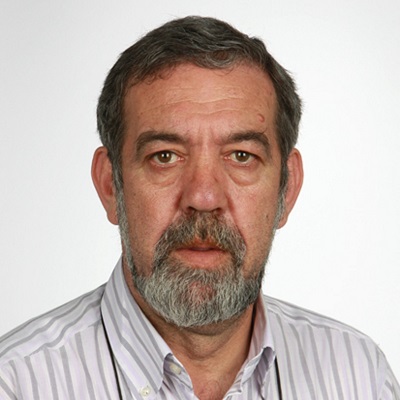

Zhi-Hua Zhou (Nanjing University)
Professor of Computer Science and Artificial Intelligence and Vice President at Nanjing University. He is internationally recognized for his work in machine learning, especially in ensemble methods, multi-label learning, and weakly supervised learning. He has authored influential books and published over 200 papers in top venues. Zhou founded the Asian Conference on Machine Learning and serves in key editorial roles. He is a Fellow of ACM, AAAI, IEEE, and AAAS, and has received major awards including China’s National Natural Science Award and the IEEE Computer Society Technical Achievement Award.
Shreyank Narayana Gowda (University of Nottingham)
Assistant Professor at the University of Nottingham where he works on deployable AI which broadly includes ethical, fair, efficient and sustainable AI. Previously, he was a postdoctoral researcher in AI for Healthcare at the University of Oxford. He completed his PhD at the University of Edinburgh funded partially by a Facebook AI scholarship.

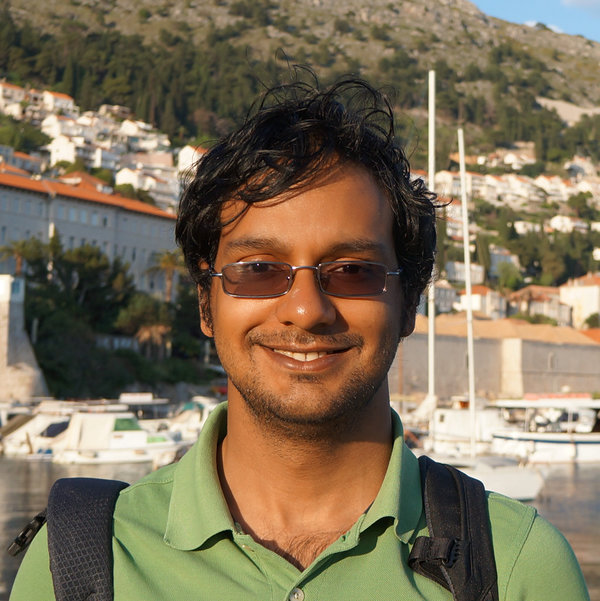
Anurag Arnab (Google DeepMind)
Research Scientist at Google DeepMind, specializing in computer vision, deep learning, and multimodal AI. He earned his DPhil (PhD) in Information Engineering from the University of Oxford, where he focused on integrating probabilistic graphical models with deep neural networks for tasks like semantic and instance segmentation. His research has contributed to major advances in vision transformers, video understanding, and robustness of neural networks, with highly cited papers such as ViViT and Gemini 1.5. He has also worked on large-scale projects like Google Lens and has co-authored over 40 publications in top-tier venues.
Han-Jai Ye (Nanjing University)
Associate Professor and Ph.D. advisor at the School of Artificial Intelligence, Nanjing University, and conducts his research within the LAMDA Group. His work focuses on representation learning and the reuse of pretrained models, and he has published over 80 papers in artificial intelligence and machine learning. He has served as Senior Area Chair for IJCAI and Area Chair for leading conferences such as ICML, NeurIPS, ICLR, and CVPR, and is an Associate Editor of TPAMI and an Action Editor of TMLR. He has also served as tutorial co-chair and doctoral forum co-chair for SDM, and has organized tutorials at major AI conferences including AAAI and IJCAI.
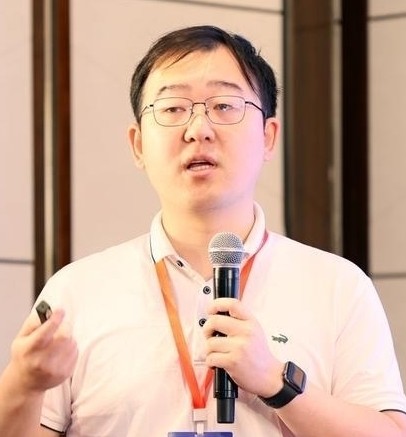

Simone Calderara (University of Modena and Reggio Emilia)
Full Professor of Machine and Deep Learning at UNIMORE’s Engineering Department Enzo Ferrari. He represents UNIMORE in APRE-EU Cluster and the CINI AIIS lab, and is Director of the AI Academy. A senior member of AImageLab and the AI Research and Innovation Center, he is also an ELLIS member and core contributor to the UNIMORE ELLIS Unit. His research focuses on deep learning for continual representation learning applied to human behavior in industrial and urban contexts. He has over 90 publications and an h-index of 46.
Xingyu Wu (The Hong Kong Polytechnic University)
Assistant Professor at the Department of Data Science and Artificial Intelligence, The Hong Kong Polytechnic University (PolyU). He received his Ph.D. degree from the University of Science and Technology of China (USTC) in 2023 and his B.Eng. degree from the University of Electronic Science and Technology of China (UESTC) in 2018. He is affiliated with the MIND Lab@PolyU. His research interests include automated machine learning, causality-based learning, and large foundation models. Dr. Wu has published actively in leading conferences and journals such as ICML, NeurIPS, AAAI, IJCAI, TPAMI, TEVC, TNNLS, and TCYB. He currently serves as the Vice Chair of the IEEE CIS Task Force on LLMs and Computational Intelligence for General-Purpose Artificial Intelligence Systems and as a reviewer for over 40 top journals and 25 major conferences. He is the recipient of the 2024 IEEE CIS FLAME Technical Challenge First Prize and 2022 ACM Multimedia Social Media Prediction Challenge Top Performance Award.
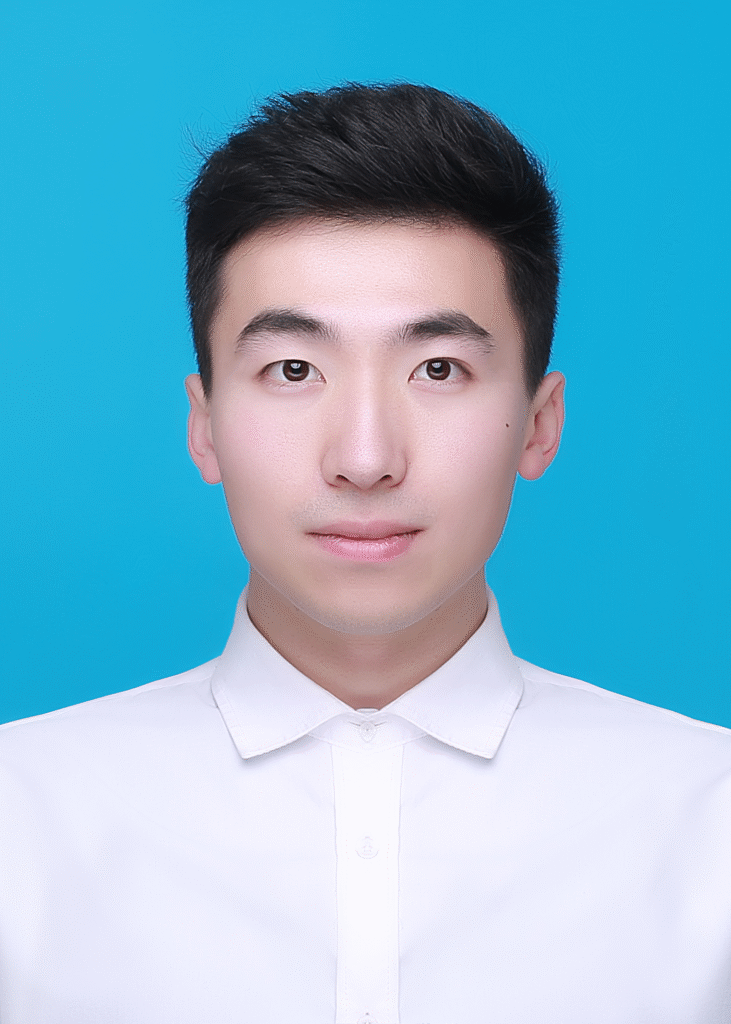
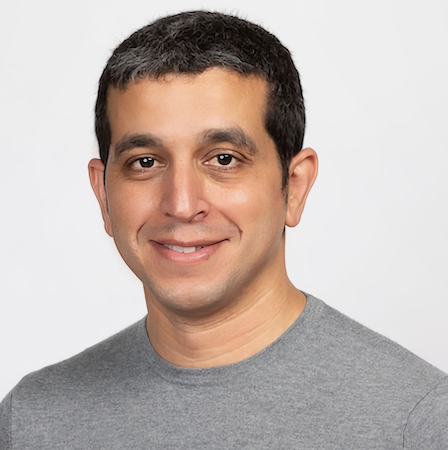
Jamal Toutouh (University of Málaga – MIT)
Tenured Professor at the University of Málaga (Spain) and Research Associate at MIT CSAIL (USA). His research explores the convergence of evolutionary computation and deep learning, designing co-evolutionary and distributed training algorithms to improve the robustness, scalability, and energy efficiency of Generative AI systems. With over 15 years of experience in evolutionary computation, machine learning, and generative models, his work bridges technical innovation and societal applications, particularly in sustainable urban mobility, cybersecurity, and smart cities. His interdisciplinary approach aims to advance the development of trustworthy and efficient AI capable of addressing complex real-world challenges.
Rui Zhang (City University of Hong Kong)
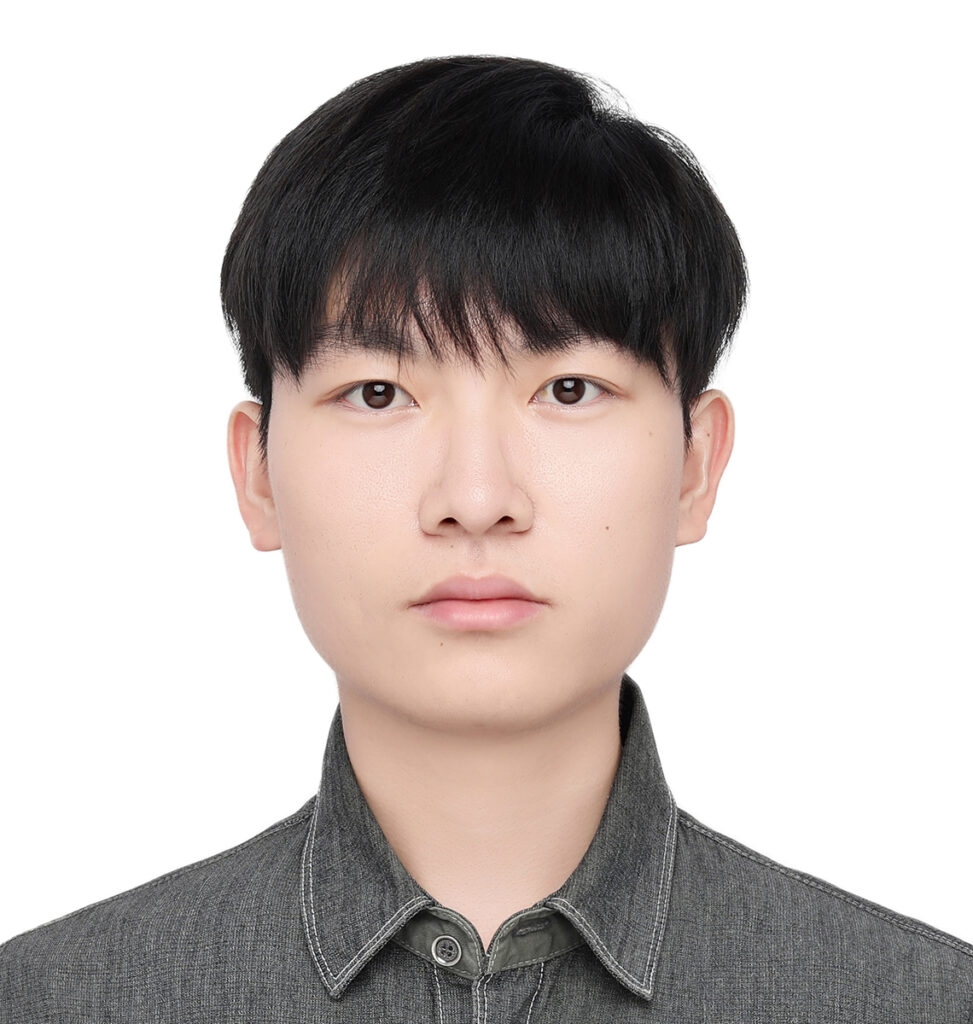
PhD student in the Optima Group at City University of Hong Kong. His research interests include large language models (LLMs), automated machine learning (AutoML), and optimization. His recent work primarily focuses on automated algorithm design with LLMs.
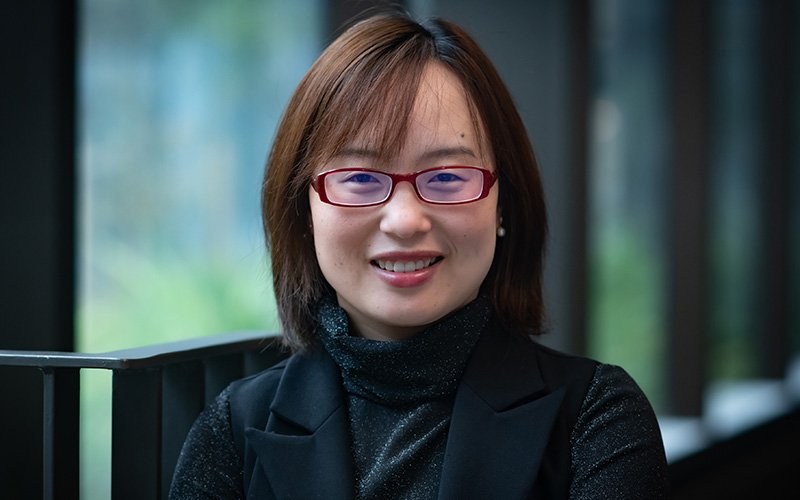
Bing Xue (Victoria University of Wellington)
Bing Xue is an IEEE and Engineering New Zealand Fellow, Professor of AI at Victoria University of Wellington, and Deputy Director of its Data Science and AI Centre. Her research spans machine learning, genetic programming, and image analysis, applied to fields like aquaculture, healthcare, and biology. With over 500 publications and 20,000+ citations, she is a Clarivate Highly Cited Researcher. She serves on IEEE and ACM committees, edits top journals, and chairs major international AI conferences.
José Antonio Carrillo (Oxford University)
Professor of Mathematics at the University of Oxford, specializing in nonlinear partial differential equations. Born in Granada in 1969, he has held academic positions in Spain, the U.S., and the U.K., including at Imperial College London. His research focuses on mathematical models in physics, biology, and neuroscience, using tools like optimal transport and entropy methods. He has received prestigious awards such as the Echegaray Medal and an ERC Advanced Grant, and is a member of several European scientific academies.

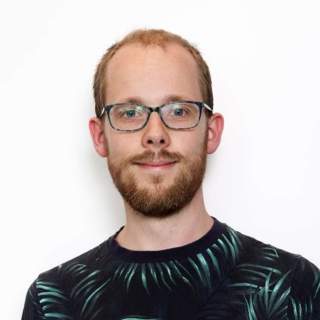
Tjeerd Jan Heeringa (University of Twente)
PhD candidate at the University of Twente, affiliated with the Mathematics of Imaging & AI group. His research focuses on the mathematical foundations of machine learning, particularly functional analysis and neural networks. He holds Master degrees in Applied Mathematics, Computer Science, and Control Theory. In 2023, he won the SIAM CSE Hackathon. Heeringa explores topics such as Barron spaces, dimensionality reduction using autoencoders and advanced activation functions. His main focus in on reproducing kernel Banach spaces and sparse representations of functions therein. He is also actively involved in undergraduate teaching, mainly for courses in the Applied Mathematics program.
Julien Mairal (Université Grenoble Alpes)
Research director at Inria, where he leads the Thoth team. His research interests are in machine learning, computer vision, image processing and optimization. He received an ERC Starting grant in 2016, and an ERC Consolidator grant in 2022. He received the Cor Baayen prize in 2013, the IEEE PAMI young researcher award in 2017, and the Inria – Académie des Sciences young researcher award in 2023, as well as a test-of-time award at ICML in 2019.
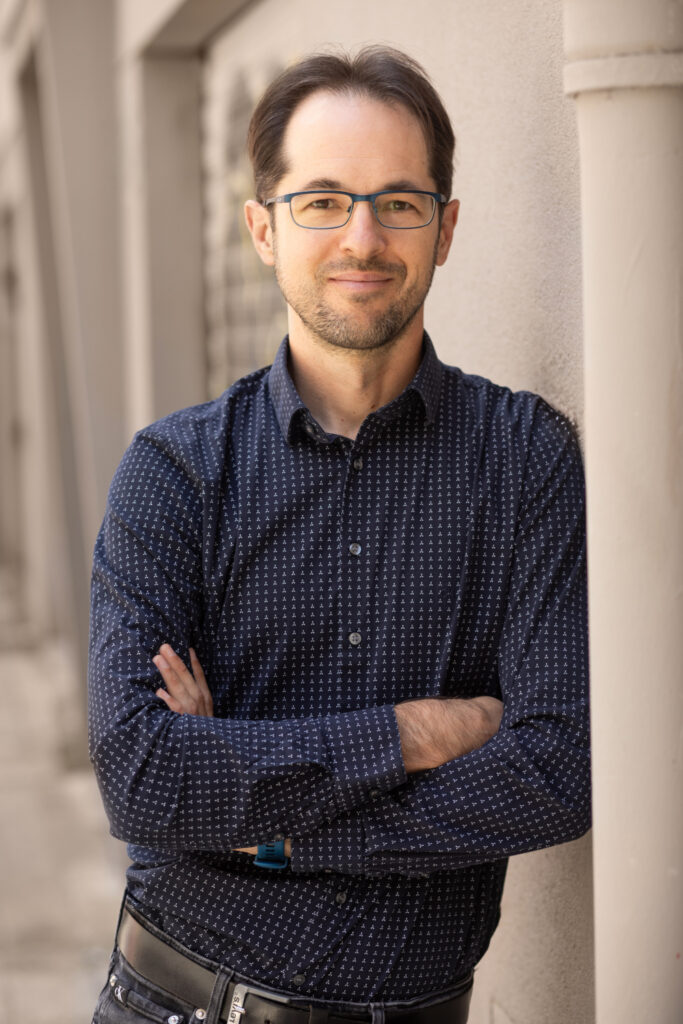

Ignacio Aguilera Martos (Granada University)
Postdoctoral researcher at the University of Granada, affiliated with the Department of Computer Science and Artificial Intelligence and the DaSCI Institute (Andalusian Interuniversity Institute in Data Science and Computational Intelligence). He holds a PhD in Artificial Intelligence, a double degree in Computer Engineering and Mathematics, and a Master’s in Data Science and AI, all from the University of Granada. His research focuses on: Language-based models, Time series forecasting, Anomaly detection, Deep learning, Transformer models
María Victoria Velasco (Granada University)
Full Professor at the University of Granada, affiliated with the Department of Mathematical Analysis in the Faculty of Sciences. Her academic career spans over three decades, with research interests primarily focused on functional analysis, non-associative algebras, and mathematical education. She has authored and co-authored numerous scholarly articles in prestigious journals such as Studia Mathematica, Bulletin of the London Mathematical Society, and RACSAM. In addition to her research, she has supervised doctoral theses and contributed to collective academic works. Professor Velasco Collado is also actively involved in undergraduate teaching, particularly in mathematics courses for degrees in Chemical Engineering and Mathematics.

Pedro Henriques Abreu (Coimbra University)
Associate Professor with Habilitation at the Department of Informatics of the University of Coimbra in Portugal, full member of the Cognitive and Media Systems of CISUC, and currently the coordinator of the Master of Informatics Engineering. His research interests include the development of Data Centric AI approaches specially related to missing and imbalance data and data fairness. He is the author of more than 100 refereed journal and conference papers in these areas, and his peer-reviewed publications have been nominated and awarded multiple times as best papers. His publications gathered over 4160 citations, an h-index of 32, and an i10-index of 66. He was the advisor of 7 PhD theses and 64 MSc theses. Currently, he is the advisor of 7 PhD theses and 5 MSc theses.
Iván Sevillano García (Granada University)
researcher at the University of Granada, affiliated with the Andalusian Interuniversity Institute in Data Science and Computational Intelligence (DaSCI). He works under a project-based research contract and is based at the UGR-AI building in Granada. His research interests include: Explainable Artificial Intelligence (XAI), Deep learning, Model interpretability, Data science and machine learning applications. He collaborates closely with leading researchers in the field and contributes to the development of interpretable AI systems within the DaSCI Institute
CONTACT
GPAIS Winter School coordinators:
- Francisco Herrera, Isaac Triguero and M. Victoria Velasco
- triguero@decsai.ugr.es
General contact for questions and issue resolution – gpais@granadacongresos.com