


Título – Exploring TabPFNv2 as a Novel Baseline for ADMET Prediction in Drug Discovery
Autores – Ipas, Oroel, Suárez Martín, Ignacio, Gomez-Trenado, Guillermo, Triguero, Isaac, Romero-Zaliz, Rocio
Resumen – Tabular data is one of the most widely used formats in bioinformatics research. Therefore,
improving algorithmic baselines for such data has important implications for a wide range of
applications. One of these critical applications is the prediction of Absorption, Distribution,
Metabolism, Excretion, and Toxicity (ADMET) properties of drugs, a key step in the early
stages of drug development. Failures due to poor pharmacokinetic profiles remain a leading
cause of attrition in clinical trials, highlighting the need for reliable predictive tools. In recent
years, machine learning has emerged as a powerful approach to model complex ADMET
behaviors, enabling faster, more cost-effective, and more ethical drug screening pipelines.
While some current state-of-the-art pproaches, such as MiniMol or MolE, leverage especialized models pretrained on millions of drug-like molecules, Gradient Boosted Decision Trees algorithms like XGBoost continue to serve as strong baselines for many general-purpose tasks.
The objective of this study is to explore the use of novel tabular foundation models as a new
baseline for tabular data in bioinformatics, with a focus on ADMET drug prediction. To this
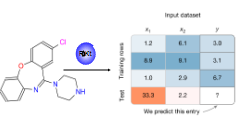
end, we used TabPFNv2, an In-Context Learning model based on transformers that was
pretrained on synthetic data. For evaluation, we employed the Therapeutic Data Commons
benchmark, comprising 22 datasets that include both regression and classification tasks,
and extracted the widely used set of 217 RDKit molecular descriptors.
This generic algorithm outperforms XGBoost in 19 out of 22 datasets and surpasses MiniMol
in 9 out of 22, despite not relying on any prior, drug-specific knowledge. Notably, TabPFNv2
achieves the top rank in 3 tasks, surpassing specialized methods in the field. These results
suggest that TabPFNv2 is a promising baseline for drug prediction, with potential
applications in other bioinformatics tasks, including clinical and small omics datasets that
meet TabPFNv2’s size constraints. Furthermore, its independence from domain-specific
pretraining and hyperparameter tuning enhances its applicability for non-expert practitioners.
Publicado en – Presented poster in the XVIII Brazilian Symposium on Bioinformatics (BSB) 2025.
DOI – 10.5281/zenodo.17468021.